Read this before following the guide
This message is pastoral teaching, not a medical diagnosis or a substitute for trained help. Distress, voices, seizures, confusion, self-harm, sleeplessness, or sudden behavioral changes can have medical, neurological, psychological, traumatic, or substance-related causes. Do not restrain, strike, frighten, isolate, deprive someone of food, water, sleep, or prescribed medicine, and do not attempt a confrontation alone. If anyone may harm themselves or another person, contact emergency services. Seek both appropriate clinical care and mature, accountable clergy; prayer and medical care are not enemies.
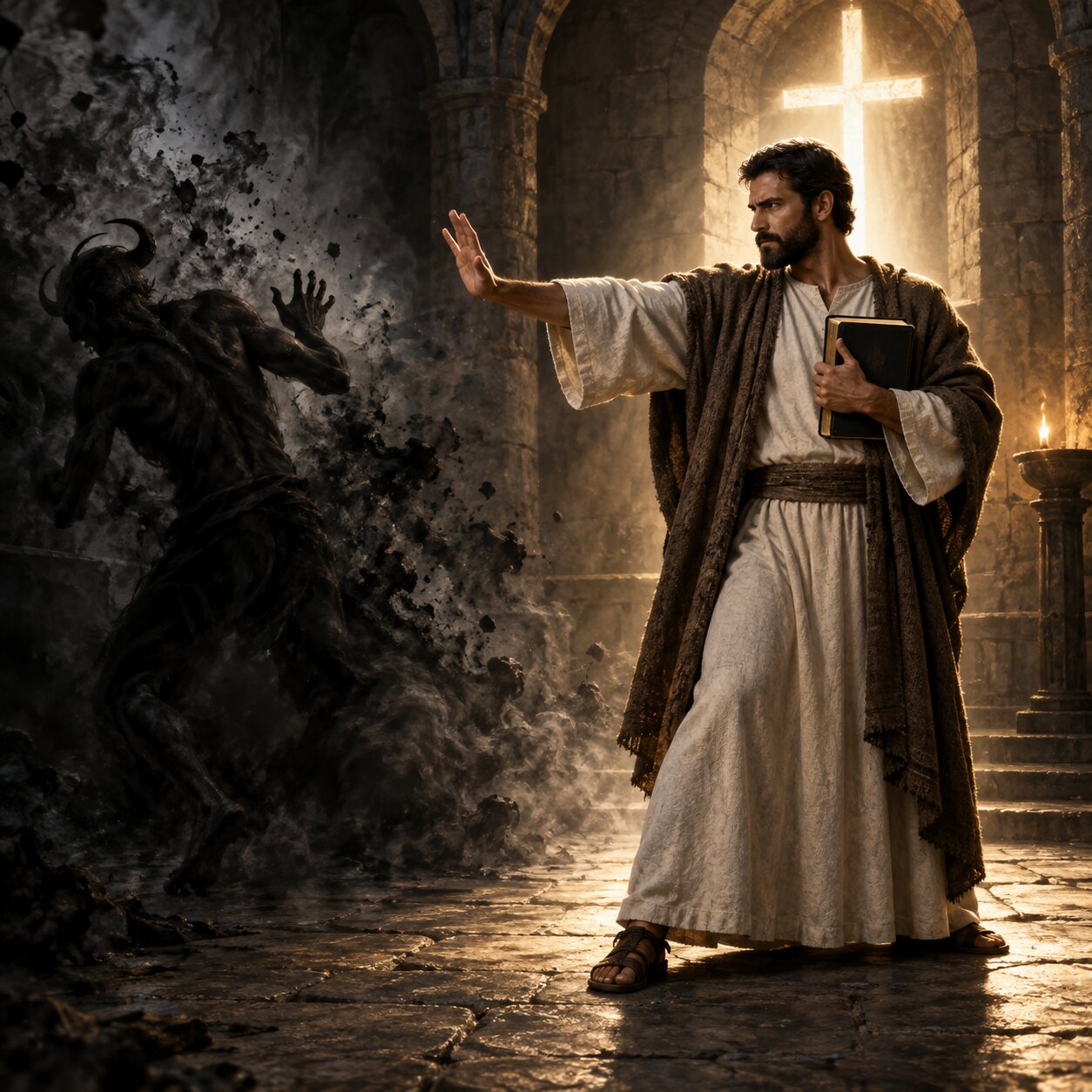
The Gospels do not present Jesus as one magician competing with another. Unclean spirits recognize His authority because He is the Son of God. He rebukes them, commands them to leave, restores those they tormented, and refuses to turn deliverance into spectacle. When Christ gives authority to His disciples, it remains delegated authority. The power is His; the glory is His; and the rescued person matters more than the drama surrounding the rescue.
“And when he had called unto him his twelve disciples, he gave them power against unclean spirits, to cast them out, and to heal all manner of sickness and all manner of disease.”
— Matthew 10:1 (KJV)
This distinction protects us from pride and fear. We are not taught to obsess over demons, hunt for secret names, bargain with spirits, or build doctrine from their words. We are taught to submit to God, resist the devil, test the spirits, stand in faith, pray, and trust the victory of Jesus Christ.
Jesus spoke directly and briefly: “Hold thy peace, and come out of him” (Mark 1:25); “Come out of the man, thou unclean spirit” (Mark 5:8); and, to the deaf and dumb spirit, “I charge thee, come out of him, and enter no more into him” (Mark 9:25). Paul likewise said, “I command thee in the name of Jesus Christ to come out of her” (Acts 16:18). These accounts emphasize Christ’s authority, not volume, theatrics, sacred objects, or secret formulas.
“And he said unto them, This kind can come forth by nothing, but by prayer and fasting.”
— Mark 9:29 (KJV)
Prayer and fasting do not manipulate God or purchase power. They humble and discipline the servant, direct attention toward God, and expose dependence upon Him. Matthew 17:21 preserves the same instruction in the KJV. The wider account also shows compassion for the afflicted person and care after the spirit departs.
Acts 19 gives a necessary warning. The sons of Sceva attempted to use “Jesus whom Paul preacheth” as a borrowed formula. The evil spirit answered, “Jesus I know, and Paul I know; but who are ye?” They were overcome and wounded. The passage does not teach believers to fear Christ’s name; it teaches that His name cannot be detached from faith, obedience, and relationship with Him.
The response in Ephesus was confession and renunciation. Those involved in occult practices brought their books together and destroyed them (Acts 19:18-20). Biblical deliverance therefore includes leaving the practices that oppose God. It is not an invitation to study incantations more deeply or replace one ritual system with a Christian-sounding one.
Use these steps calmly, with consent whenever the person can give it, and with mature church leadership. They are a pastoral framework drawn from Scripture, not a guarantee that every crisis has a demonic cause.
Secure immediate safety and discern carefully
Move away from weapons, traffic, fire, heights, and crowds. Do not leave a person in crisis alone. Contact emergency or medical help when needed. Pray for wisdom and test claims rather than assuming every illness, temptation, nightmare, or emotional struggle is possession (1 John 4:1; 1 Thessalonians 5:21).
Gather mature, accountable believers
Do not seek a performance or attempt a dangerous confrontation alone. Ask trusted pastors or elders who are humble, sober, discreet, and willing to cooperate with healthcare professionals. Christ sent disciples in ministry and the New Testament places spiritual care within the body of believers (Mark 6:7; James 5:14-16; Galatians 6:1-2).
Submit to God and confess known sin
Begin with God, not the demon. Confess sin to God, forgive others, turn from bitterness, and place faith in Jesus Christ. “Submit yourselves therefore to God. Resist the devil, and he will flee from you” (James 4:7). Repentance is not blaming the afflicted person; it is every participant placing themselves under God’s rule.
Renounce occult involvement without inventing hidden contracts
Reject divination, spirit consultation, spells, curses, occult vows, and objects deliberately used in those practices (Deuteronomy 18:9-14; Acts 19:18-20). A person may plainly say, “I renounce every practice and promise that opposed Jesus Christ.” Scripture does not require discovering imaginary legal documents, secret demon names, or every forgotten event before Christ can save.
Pray, and fast when it is medically safe
Ask God for mercy, truth, protection, and freedom. Fasting should never be imposed upon a child, an ill person, a pregnant person, or anyone for whom it is unsafe. Those ministering may fast voluntarily and responsibly as they seek God (Mark 9:29; Matthew 17:21).
Command briefly in the name of Jesus Christ
A mature Christian leading the prayer may say calmly: “In the name of Jesus Christ, every unclean spirit afflicting this person, come out and do not return.” This follows Mark 9:25 and Acts 16:18. Do not bargain, invite manifestations, accept teaching from a spirit, or prolong questioning. Keep attention on Christ and the person’s safety.
Stop abuse, spectacle, and profiteering
Jesus’ servants must never hit, choke, shame, film for entertainment, demand money, or deny ordinary care. Christ restored people to dignity and soundness (Mark 5:15-20; Luke 8:35-39). If the situation becomes unsafe, stop and obtain qualified help.
Fill the “house” with faithful Christian life
Jesus warned about an unclean spirit returning to a house found “empty, swept, and garnished” (Matthew 12:43-45; Luke 11:24-26). Deliverance is not merely removal; it is belonging to Christ. Continue in prayer, Scripture, worship, fellowship, baptism and Communion according to your church, honest work, sleep, medical care, and relationships that support holiness.
Put on the whole armour of God every day
Stand in truth, righteousness, the gospel of peace, faith, salvation, the Word of God, and persevering prayer (Ephesians 6:10-18). Resist steadfastly in faith (1 Peter 5:8-9). Take thoughts captive to the obedience of Christ (2 Corinthians 10:3-5), and overcome evil with good (Romans 12:21).
Rejoice in salvation, not spiritual power
When the seventy rejoiced that spirits were subject to them, Jesus redirected their joy: “rejoice, because your names are written in heaven” (Luke 10:17-20). The goal is not a reputation for power. The goal is a person restored to Christ, truth, community, and peace.
The Bible recognizes that one generation’s sin can wound those who follow. Families can pass down idolatry, abuse, addiction, fear, and destructive patterns. Yet Scripture does not teach that a repentant person is hopelessly owned by an ancestor’s guilt. Ezekiel 18 repeatedly insists that the son does not bear the guilt of the father when he turns and does what is lawful and right. Jeremiah 31:29-30 makes the same correction.
“Christ hath redeemed us from the curse of the law, being made a curse for us.”
— Galatians 3:13 (KJV)
Therefore we may confess inherited patterns without inventing an inherited ownership that outranks Christ. Colossians 1:13 says the Father “hath delivered us from the power of darkness, and hath translated us into the kingdom of his dear Son.” Colossians 2:14-15 says Christ blotted out the handwriting against us and spoiled principalities and powers.
The New Testament gives no ceremony for locating or canceling a “demonic contract.” If a person knowingly made an occult vow, they can renounce it plainly, confess the sin, remove related objects, make restitution where appropriate, and trust Christ’s forgiveness (1 John 1:9; Acts 19:18-20). Freedom rests on Christ’s covenant and victory, not on perfectly remembering every sentence once spoken.
KJV Apocrypha — Tobit 3:8; 6:7-8; 8:2-8. Tobit names the demon Asmodeus. Raphael instructs Tobias to burn part of a fish’s heart and liver; the demon flees and Raphael binds it. Tobias and Sarah then pray to the God of their fathers. This is an important ancient deliverance narrative, but Christians should not turn its unique story element into a universal recipe when the New Testament centers deliverance in Christ’s authority.
Septuagint. The Greek Old Testament preserves the same Tobit tradition and numbers the familiar protection psalm as Psalm 90 rather than Psalm 91. Psalm 90/91 confesses refuge under the Almighty, freedom from terror, and God’s angelic protection. It is prayer and proclamation—not an incantation.
Dead Sea Scrolls — 11Q11; 4Q510-511; 4Q560. These fragmentary Jewish writings preserve psalms and protective or exorcistic language against hostile spirits. They show that concern about evil spirits existed in the Jewish world around the time of the New Testament. They are valuable historical witnesses, but they are not a Christian manual and must not replace the plain teaching and example of Jesus.
1 Enoch 15:8-12; 16:1. This text explains evil spirits as spirits proceeding from the dead giants and describes their violence and corruption until judgment. It supplies background to later Jewish demonology, but it does not give the Church a safer or clearer deliverance procedure than the Gospels.
Jubilees 10:1-14. Noah prays because evil spirits are misleading and harming his descendants. God commands that the spirits be bound, while Noah receives knowledge connected with healing. Its most useful pastoral emphasis is that Noah appeals to God and that care for bodily affliction is not opposed to spiritual prayer.
Gospel of Thomas, Saying 35. This saying parallels Jesus’ image of binding the strong man before plundering his house (compare Matthew 12:29; Mark 3:27; Luke 11:21-22). It supplies no separate rite of deliverance.
Nag Hammadi writings. The Gospel of Philip discusses evil powers, unclean spirits, and the Holy Spirit, but within a theology that differs substantially from the canonical Gospels. The collection does not offer a clear, apostolic step-by-step exorcism practice that should govern Christian ministry.
The later Book of Jasher. A passage commonly numbered Jasher 2:10-11 claims that Cainan ruled spirits and demons through wisdom. This work should not be confused automatically with the lost Book of Jasher mentioned in Joshua 10:13 and 2 Samuel 1:18. Its claim is not a command for Christians and should not be used as a deliverance technique.
No index can settle every verse where terms such as devil, spirit, familiar spirit, unclean spirit, principality, or power appear. The following gathers the principal KJV passages directly relevant to demons, expulsion, resistance, occult renunciation, and protection.
Christ’s authority and direct deliverance
Matthew 4:1-11; 8:16, 28-34; 9:32-34; 10:1, 7-8; 12:22-30, 43-45; 15:21-28; 17:14-21; Mark 1:21-28, 32-34, 39; 3:11-15, 22-27; 5:1-20; 6:7, 13; 7:24-30; 9:14-29, 38-40; 16:9-20; Luke 4:1-13, 31-37, 40-41; 6:17-19; 7:21; 8:1-3, 26-39; 9:1-2, 37-43, 49-50; 10:17-20; 11:14-26; 13:10-17.
Demons, devils, and hostile spiritual powers
Leviticus 17:7; Deuteronomy 32:17; 2 Chronicles 11:15; Psalm 106:36-38; Isaiah 13:21; 34:14; Daniel 10:12-21; Matthew 25:41; 1 Corinthians 10:19-22; Ephesians 2:1-3; 6:11-12; Colossians 2:15; 1 Timothy 4:1; James 2:19; Revelation 9:20; 12:7-12; 16:13-14; 18:2. The KJV frequently uses the plural word “devils” where many later English translations use “demons.”
Apostolic ministry and warnings
Acts 5:12-16; 8:5-8; 10:38; 16:16-18; 19:11-20; 1 Corinthians 10:14-22; 12:1-3; 2 Corinthians 2:10-11; 6:14-18; 10:3-5; 11:3-4, 13-15; 12:7; Galatians 1:8-9; Ephesians 4:26-27; 6:10-18; Colossians 1:12-14; 2:13-15; 1 Thessalonians 5:19-22; 1 Timothy 4:1; 2 Timothy 1:7; 2:24-26; James 4:7-10; 1 Peter 5:8-10; 1 John 3:8; 4:1-4; Jude 6-9; Revelation 12:7-11.
Occult practices to reject
Exodus 22:18; Leviticus 19:26, 31; 20:6, 27; Deuteronomy 7:25-26; 18:9-14; 1 Samuel 15:23; 28:3-25; 2 Kings 21:1-9; 23:24-25; 1 Chronicles 10:13-14; Isaiah 8:19-20; 19:3; 47:9-14; Micah 5:12; Acts 13:6-12; 16:16-18; 19:18-20; Galatians 5:19-21; Revelation 21:8; 22:15.
Protection, refuge, and steadfast life
Psalm 23; 27; 34:4-7; 46; 91; 121; Proverbs 18:10; Isaiah 54:17; Matthew 6:9-13; John 8:31-36; 10:27-30; 14:15-27; 17:11-19; Romans 8:31-39; 12:1-2, 21; 13:11-14; 1 Corinthians 6:19-20; Philippians 4:4-9; Colossians 3:1-17; 2 Thessalonians 3:3; Hebrews 4:14-16; 10:19-25; 13:5-6.
This prayer is not a charm. Pray it sincerely, calmly, and in faith, preferably with mature believers. Replace “this person” with the person’s name when appropriate and when they consent.
Prayer“Father in heaven, hallowed be Thy name. Thy kingdom come. Thy will be done. Deliver us from evil, for Thine is the kingdom, and the power, and the glory, for ever. I submit myself to God and resist the devil. I confess my sins and ask cleansing through Jesus Christ. I renounce every occult practice, vow, agreement, dedication, curse, and work of darkness in which I knowingly participated. I belong to Jesus Christ, who hath delivered us from the power of darkness and spoiled principalities and powers.
In the name of Jesus Christ, every unclean spirit afflicting this person: come out, depart, and enter no more. You have no authority to harm, deceive, accuse, or return. Lord Jesus, rebuke the enemy and set the captive free. Let no inherited pattern of sin, fear, violence, idolatry, or bondage rule this life. Christ hath redeemed us from the curse, and each soul stands before God; establish this person in truth, repentance, mercy, and peace.
Lord, put upon us the whole armour of God: truth, righteousness, the gospel of peace, faith, salvation, and the Word of God. Hide us under the shadow of the Almighty. Guard our minds, bodies, homes, sleep, and relationships. Fill every place once ruled by darkness with Thy Holy Spirit, Thy Word, faithful fellowship, and holy obedience. Give wisdom to pastors, physicians, counselors, family, and friends who provide care. Let nothing separate us from the love of God which is in Christ Jesus our Lord. In the name of the Father, and of the Son, and of the Holy Ghost. Amen.”
Continue care after prayer
Stay with the person, help them rest and hydrate, and arrange appropriate pastoral and clinical follow-up. Do not tell someone to stop medication or therapy. If symptoms continue, that does not prove weak faith, hidden sin, or a stronger demon. Continue seeking truth, safety, compassionate care, and the peace of Christ.