Scripture: Matthew 5:44, Acts 7:60, Luke 23:34 (KJV)
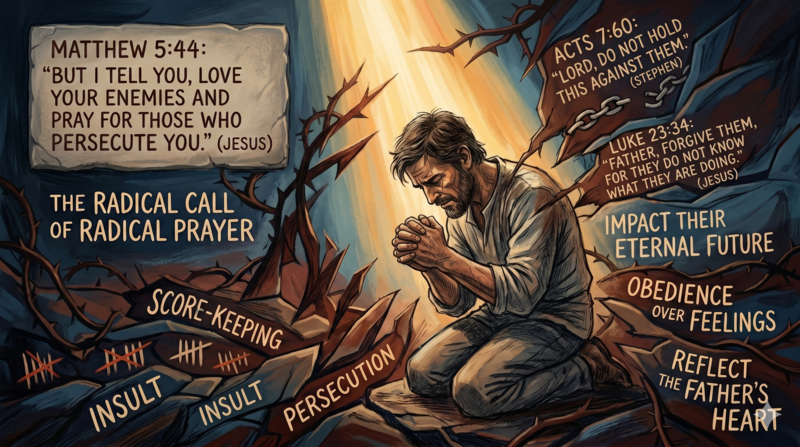
Introduction: The Hardest Commandment
We often live in a culture that thrives on keeping score. If someone cuts us off in traffic, we want to honk. If a coworker undermines us, we want to see them fail. If someone hurts us deeply, our natural human instinct is to wish for a front-row seat to their downfall. But Jesus did not come to establish a natural kingdom. He came to establish a supernatural one.
In the Sermon on the Mount, Jesus drops a bombshell command that turns human nature completely upside down:
"But I say unto you, Love your enemies, bless them that curse you, do good to them that hate you, and pray for them which despitefully use you, and persecute you;"
— Matthew 5:44 (KJV)
Let us be honest: that is an incredibly uncomfortable verse. It is easy to pray for our children, our friends, or our church. But praying for the person who lied about you? The person who broke your heart? The person who actively opposes everything you stand for? Why would Jesus ask us to do something so radically difficult? If we look closely at the heart of Christ, we find three life-altering reasons why we must pray for those who hate us.
I. We Are Commanded to Do It: Obedience Over Feelings
The first reason is the simplest, yet often the hardest to swallow: We are commanded to. Notice that Jesus did not say, "If you feel up to it, try praying for your enemies." It is not a suggestion, a helpful tip, or an optional advanced track for seasoned believers. It is a direct command from the King.
Christian obedience is not dependent on our emotions. If we wait until we feel like praying for someone who hurt us, we will never do it. When we pray for our persecutors, we are telling God, "I do not understand this, and my flesh struggles with this, but I trust Your leadership more than I trust my hurt." It is the ultimate test of whether Jesus is truly Lord of our lives, or if our feelings are sitting on the throne.
II. Prayer is an Antidote Against Bitterness
When someone wrongs us, a toxic poison enters our soul. That poison is bitterness. We often mistake holding onto anger as a weapon against the person who hurt us, but in reality, resentment is like drinking poison and expecting the other person to perish. Bitterness rots us from the inside out.
How do we neutralize the poison? Prayer. Prayer is the ultimate spiritual antidote to bitterness. When you bring your enemy before the throne of grace, something miraculous happens. You stop viewing them through the lens of your hurt, and you begin to see them through the lens of God's grief over sin. It breaks the chains of resentment holding you captive. You cannot genuinely pray for God to bless, heal, and work in someone’s life while simultaneously nurturing a grudge against them. Prayer forces your hands to open and let go.
III. It Can Lead to the Salvation of the Persecutor
The third reason contains the ultimate power of redemption: Our prayers have the power to impact the eternal destiny of our persecutors.
Think about the history of the early Church. The greatest missionary the world has ever known was a man named Paul. But before he was Paul the Apostle, he was Saul the Persecutor. He breathed out murderous threats against Christians. He presided over the execution of Stephen, the first Christian martyr. As Stephen was being stoned to death, do you remember his final words?
"And he kneeled down, and cried with a loud voice, Lord, lay not this sin to their charge. And when he had said this, he fell asleep."
— Acts 7:60 (KJV)
Stephen prayed for his persecutors. Looking on was a young man named Saul. Is it any coincidence that the very man Stephen prayed for became the man God saved on the road to Damascus? When we pray for those who hate us, we are asking God to do what only He can do: break a hardened heart, open blind eyes, and turn an enemy of the cross into a brother or sister in Christ.
Final Encouragement
Ultimately, praying for our enemies is the closest we will ever get to looking like Jesus on this earth. As Jesus hung on the cross, battered, bruised, mocked, and bleeding, He did not call down fire from heaven to consume His killers. Instead, He looked at the very people who drove nails into His hands and prayed:
"Then said Jesus, Father, forgive them; for they know not what they do..."
— Luke 23:34 (KJV)
When we pray for those who hate us, we reflect the heart of a Savior who prayed for us while we were still His enemies. Praying for our enemies does not change their past behavior; it changes our present heart and impacts their eternal future. Let us walk in that radical grace today.
"Father, we thank You for the radical example of Your Son, Jesus Christ, who loved us and gave Himself for us while we were yet sinners. Lord, we confess that praying for those who hurt, hate, and persecute us goes against our human nature. We ask for the supernatural power of the Holy Spirit to obey this command. Deliver our hearts from the poison of bitterness, and replace our resentment with Your divine compassion. We pray for our enemies today—open their eyes, heal their brokenness, and let Your grace lead them to salvation. Transform us into Your likeness as we release them into Your hands. In Jesus’ name, Amen."